What is the Praxis Professional School Counselor 5421 Exam?
The Praxis Professional School Counselor exam, or Praxis 5421 exam, is designed to test the skills, knowledge, and overall competency of aspiring school counselors. Also referred to as the Praxis II School Counseling exam, this test is part of the Praxis Subject Assessments required by some states for the licensure and certification processes. Although this computer-based exam is open to anyone, it is intended for those who have completed training in the field. Many states require this Praxis test as part of the certification process for becoming a school counselor for grades K through 12. Those who pass this Praxis exam for school counselors demonstrate their understanding of standards based on the American School Counselor Association's ASCA National Model.
What is on the Praxis 5421 Test?
The Professional School Counselor Praxis exam is a 2-hour exam that consists of 120 selected-response (multiple-choice), questions. The time allotment is in total and is not broken up amongst sections, although the exam covers four different content categories that test on specific areas that align with national standards. Each content category covers a range of subcategories with multiple topics and makes up a different proportion of the Praxis exam for school counselors. The table below outlines the total proportion of the exam for each content category.
| Content Category |
Approximate Percentage
of the Exam |
Approximate Number of
Selected-Response Questions |
| Foundations |
18% |
22 |
| Delivery of Services |
45% |
54 |
| Management |
15% |
18 |
| Accountability |
22% |
26 |
Content Category I. Foundations
The first category of Foundations is the third largest section at 18% of the total exam (about 22 questions). This section is designed to test candidates' knowledge of major concepts and skills in the field. Test-takers are expected to have an understanding of a range of topics that fall within the following subcategories:
- Position of the professional school counselor and history of the role
- Human growth/development over the lifespan
- Ethics
- Legal issues in the field
Questions may ask about the role of school counselors, theories related to cognitive development, the ethical standards for school counselors, and the policies and laws affecting school guidance counselors' responsibilities.
Content Category II. Delivery of Services
The Delivery of Services content area is the largest area, as it makes up about 45% of the exam (around 54 questions). It focuses on the theories, techniques, and skills utilized by school counselors as they perform their job duties. The section is broken up into the following subcategories:
- Guidance and counseling
- Consulting and working with others
The Guidance and Counseling subcategory may ask about topics including theories of individual counseling, theories of group counseling, crisis intervention, conflict resolution, and prevention of common student concerns (like bullying or stress). The Consultation and Collaboration section may ask candidates about the characteristics of consultation, characteristics of collaborative relationships, and interventions and accommodations for students.
Content Category III. Management
The Management content area is the smallest section of the exam at about 15% (around 18 questions). This portion of the exam focuses on candidates' leadership and management skills, as well as their understanding of the role and purpose of school counseling in schools. This section is different from the first two content categories because it is not broken up into different subcategories. Test-takers may be asked about topics such as:
- Using technology to oversee school guidance/counseling programs
- Understanding school counseling's role in the educational process
- Creating a school guidance/counseling program
- Managing programs for at-risk students
- Overseeing referrals
Content Category IV. Accountability
The final content area, Accountability, is also not broken up into subcategories either. This section is the second largest section at approximately 22% of the total exam (about 26 questions). Questions focus on the need for accountability in school guidance and counseling programs and how this is achieved. Candidates may be asked questions related to topics including:
- Methods of measuring student achievement and the effectiveness of counseling programs
- Use of data analysis in program improvement
- Different kinds of assessments used in the field
- Factors used to select the correct assessment
- Validity and reliability for assessments
- Interpreting different kinds of assessments
- Issues that affect student test performance (i.e., disability or cultural issues)
How to Register for the Professional School Counselor Praxis Test
Once test-takers know that the Praxis 5421 is required for their state, they need to be sure to register for the Praxis School Counselor exam. Praxis registration can take place through the mail, via phone, or online. Online is one of the easiest options, as it is fast, free, and allows candidates to schedule their test at the same time. In order to register online, candidates need to:
- Log into their Praxis account
- Verify the correctness of their email address
- Click 'Register for a Test' and select the Praxis 5421
- Select 'Schedule Tests page' to choose the date and location of the exam
- Pay the Praxis test cost of $130
- Print admission ticket for in-person testing
The Praxis School Counselor exam is available for in-person and at-home testing. Candidates can search for a Praxis testing center near them using the 'Find a Test Center' tool on the ETS website, which searches for centers by zip code. The ETS website also has a 'Find a Test Date' tool that allows test takers to select their exam and see the available Praxis test dates and expected score dates.
How to Prepare for the Praxis II School Counseling Exam
To prepare for their Praxis 5421 exam, candidates should allow enough study time prior to their selected test date. The ETS provides a wide range of valuable study resources, as well as some study tips, such as:
- Know what is on the exam
- Figure out strengths and weaknesses with the content
- Gather study resources such as Praxis practice exams
- Plan out your study time
- Create a study plan (scheduled time for each area)
- Learn how the Praxis scoring system works
One of the best ways to understand the content of the exam is using a School Counselor Praxis study guide. Praxis II Professional School Counselor practice tests can also help test takers evaluate their understanding of the material. Candidates can also utilize resources such as library books, textbooks, and other online study materials to help them prepare. Creating a study plan and dedicating more time to larger areas of the exams, as well as areas of weakness, can also be beneficial.
Praxis School Counseling 5421 Study Guide
One of the best School Counselor Praxis study guides available is the ETS's Praxis 5421 Study Companion. This resource outlines the format of the exam, including the time allotment, number of questions, and content categories. The study companion also discusses the various topics that candidates should understand under each content category and subcategory. Based on their understanding of the different content areas, test takers can better create a study plan after reading through a detailed study guide. Finally, the study guide provides some Praxis test sample questions that test takers can use to get an idea of the types of questions asked.
Praxis Professional School Counselor 5421 Practice Tests
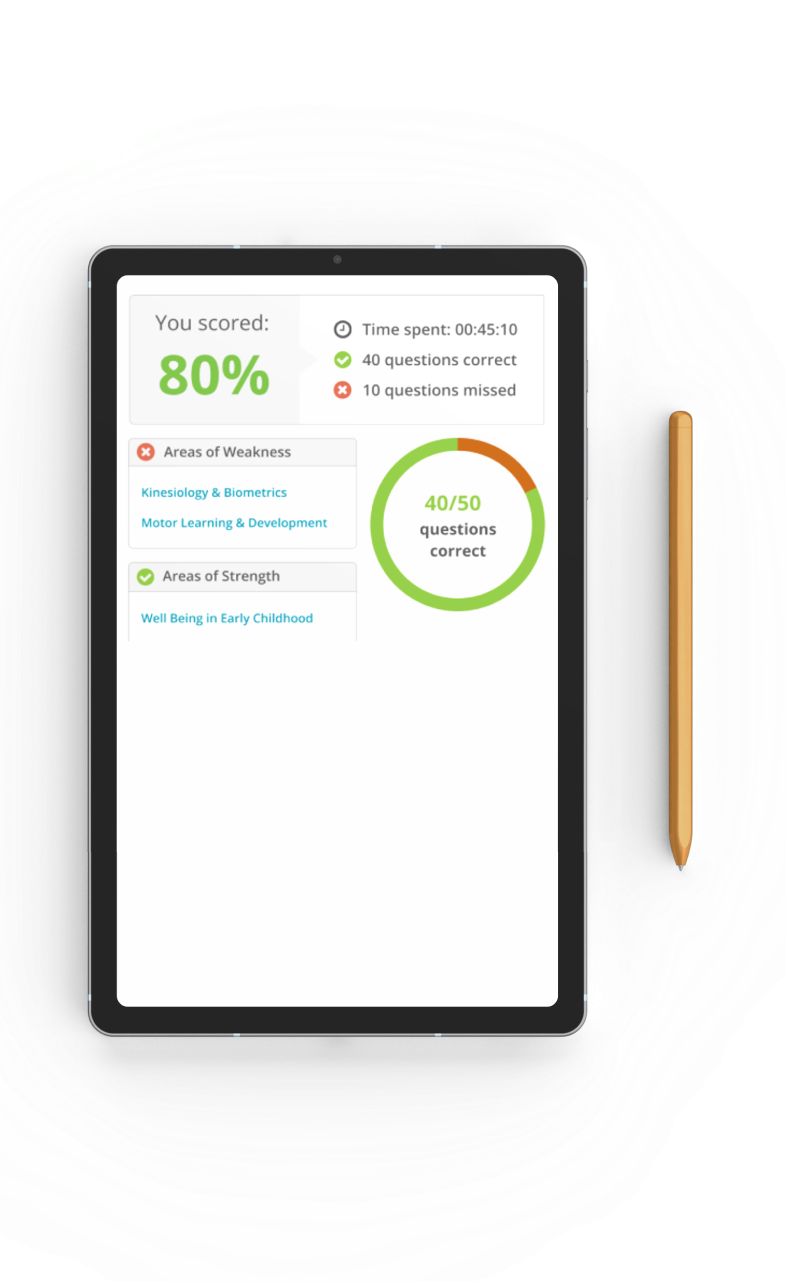
Practice questions can make Praxis test preparation more effective and help test takers better understand the content of the exam and personal areas of strength and weakness. Therefore, practice tests are a great study tool. While there are some free exam options available from various online sources, the ETS provides a Praxis II Professional School Counselor practice test for a small fee. This test simulates the computer-based format of the exam, is full-length, timed, and also provides test takers with the correct answers at the end of the exam. The detailed explanations for the answer are a good additional study tool for test takers to understand their mistakes.
Praxis Professional School Counselor 5421 Exam Scores
The passing Praxis 5421 score range varies by state, but many states use a Praxis 5421 passing score of 156 or higher. However, South Dakota and Utah require a passing score of 164 or higher.
Since the Praxis 5421 is a selected-response exam, the questions are scored by the computer. Test takers receive one raw point for every correct answer, the total of which is converted to a scaled score to account for the different editions of the exam.
Praxis test score reports are posted on a candidate's Praxis account after 5 pm Eastern Time on their expected score report date, which can be found using the 'Find a Test Date' tool on the ETS website. Usually, for the Professional School Counselor 5421 exam, test takers can expect their scores in about 2 to 4 weeks.
Expert Contributor
Bryan McMahon
Bryan McMahon, M.A. is a high school biology and special education teacher in New Jersey with over 14 years of experience. He has hundreds of hours of experience tutoring aspiring teachers to take the CSET/CBEST exam suite. He has successfully passed the science and special education Praxis exams. Bryan completed a B.S. in Education from Seton Hall University and an M.A. in Teaching from Mangrove College.
-
Test takers can pass the Praxis II School Counselor Praxis by studying hard and taking advantage of the different study materials provided by the ETS. For example, candidates can understand the content of the exam using the study companion and practice questions using an interactive practice exam.
-
The Professional School Counselor Praxis exam is required by several states, with most states requiring a passing score of 156 or higher. However, South Dakota and Utah require a passing score of 164 or higher.
 942Practice Questions
 132Videos
 183Lessons
 14Flashcards